Institutional Evolution: J.M.W. Turner, Berenson, Duveen, Mellon, Yale, and the Tate Gallery
|
JMW Turner: the source:
Duveen collector / philanthropists:
Pierpont Morgan; Rodolphe Kahn; Benjamin Altman;
William Hearst; Jules Bache; P.A.B. Joseph E. Widener; Henry Clay Frick; Samuel
Kress; John D. Rockefeller; Collis Huntington; George J. Gould; Isabella Stewart
Gardner; Rothschild; H.E. Huntington; Henry Goldman, Andrew
Mellon, J. Paul Getty
Paul Mellon,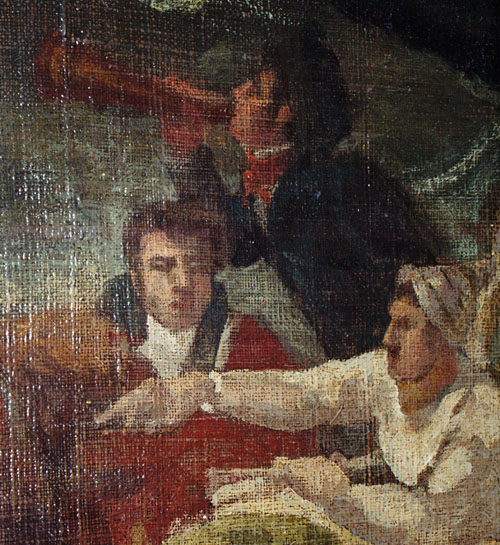 Bernard Berenson Joseph Duveen Lord Kenneth Clark


Excerpt
“Let us consider the times in
which John Anderson Jr. lived. By 1926 when his book, The Unknown Turner was published, 75 years after J.M.W.
Turner’s death, Britain was just barely getting a handle on the enormous Turner
Bequest.[1]
Modern-day art scholarship had yet to fully emerge with its fundamental
documentary needs. Before this, most economic resources necessary to take time
for the “gentlemanly” activity of art
connoisseurship were private,
derived from private family wealth, people with aristocratic means so to speak.
In more recent history, and particularly in American, industrial fortunes
from the 19th and early 20th century became the foundation
for acquiring great art treasures from abroad. These new “squillionaires,” as
Bernard Berenson referred to them, realized early on that a broader appreciation
of culture was needed to make them fully-fledged nobility in their fresh new
land. This along with new tax benefits for gifting art to public collections
enticed a deluge of art from abroad, which in turn made fortunes for several
European dealers. During this upheaval of shifting art-fortunes, and because of
distrust created by voracious competition between dealers and collectors, a
consequent instability was soon met with demands for greater guarantees. There
was apparently less confidence in the old courtly way of doing business, and as
chivalrous attitudes waned the need for documentation became more important.
The competition amongst dealers invariably included snipes at each other’s
inventories as each tried to snare the best squillionaire. One of the best and
most formative examples of this rats-nest of conspiracy trailed an Italian
Collection of modern fakes through the hands of a British dealer in 1902 and
into the hands of the American, Mr. Walters of Baltimore. According to James H.
Duveen by 1907 these works had eventually been purged from the collection but in
the mean time the whole raft of squillionaires was put on guard:
“This tragicomedy took place during the teething period of American
collecting, and it helped at any rate to stop this kind of piracy. The
multi-millionaires became much more prudent. They bought from reputable dealers,
or employed them to collect for them; but then the professional expert began to
assert himself. There were many of these from the late Doctor Wilhelm von Bode
downwards. Many of these experts charged fees for their opinion or their
, ‘’’: certificates’, and some even expected a percentage of the value. It cannot
surprise anyone that with such a fertile field to exploit, some of these experts
became ‘industrialized.’ Soon, work by certain masters had to be, ‘’’: certified’ by
one or more of the particular specialists in the various schools; and, humanity
being what it is, what had begun as a most honourable occupation became in many
cases a furious race for gain, frequently degenerating into the behaviour of a
pack of hungry wolves. Those experts who did not accept fees were so jealous
that it was often sufficient for one deus ex machina to pronounce a
judgment to move another one of the same elevated standing to contradict it.
During the last half century the law courts have had to deal with many cases
resulting from these internecine wars.”[iv]
|
Soon,
work by certain masters had to be, ‘’’: certified’ by one or more of the
particular specialists in the various schools; and, humanity being what it
is, what had begun as a most honourable occupation became in many cases a
furious race for gain.

As discussed earlier support by an expert for a painting can put the monetary value over the top. “The power that scholars wield in this way can have at least two unfortunate effects. The more honest would be so circumspect that they avoid publicly expressing doubts about paintings on the market or in private hands which may pass or have passed, for years as definitely the work of the artist in question. The less honest may be prepared to exchange their confirmation of a painting’s authenticity for a cash remuneration; there are many certificates of this sort in circulation, some signed by scholars of undoubted eminence.” (Geraldine Keen, Money and Art, (G. P. Putnam’s Sons, New York, 1971), 41) The cozy payment-for-services relationship between dealers and experts was apparently not restricted to individuals, but also institutions, for example: “Joseph Duveen should have died a baronet, for he was offered a baronetcy in reward of his gift of the Turner wing to the Tate Gallery.” [v] It is difficult to say which is more insidious and which could more likely lead to corruption: the outright payment for services as with Bode, or rewarding with regal privilege as with certain high profile nobly-blessed institutions. The latter is of course cyclical, and begs further mutually supporting patronage. In England particularly, it appears as if from ancient times patronage has been effectively folded into the social fabric under the guise of duty. Indisputably, mutual, ‘’’: back scratching’ has never proven very honest or truth seeking at the best of times. Influx of masterpieces, injection of huge amounts of American currency, new tax laws, and the new age of documentation was the critical combination that set ablaze the new age of art scholarship. Flowing from the financial resources of those great tycoons, the institutions, as primary collectors took center stage. These moguls included: Count Baltazzi; Pierpont Morgan; Rodolphe Kahn; Benjamin Altman; William Hearst; Jules Bache; P.A.B. and Joseph E. Widener; Henry Clay Frick; Samuel Kress; John D. Rockefeller; Collis Huntington; George J. Gould; Isabella Stewart Gardner; Rothschild family; H.E. Huntington; Arabella Huntington Yarrington; Mrs. A. Hamilton Rice; Mrs. Horace E. Dodge; Mrs. E.T. Stotesbury; Henry Goldman; Philip and Robert Lehman, and Andrew Mellon. After being gifted great collections and almost unlimited endowments, the private and public institutions overgrew private interests and struck a death-knell to effective individual involvement. The art history students that began to flood out of art schools (in England in particular, where policies required, ‘’’: art history’ departments to be connected to each art school) ended up supplying the need which the American philanthropist created. This new generation of aficionados was not comprised of grass-root collectors with deep passion, but instead, university grads looking for employment and a secure future in a , ‘’’: position’. Beyond this apparent dimming of Renaissance thought there seemed to be a flickering light; “From his parents Paul [Mellon] inherited, in his words,, ‘’’: a desire to own, to enjoy, to savour, and to conserve rare and beautiful things, a desire which must infuse all collectors.’’ Anyone who has felt the impulse to,, ‘’’: conserve rare and beautiful things’ has been infected by the virus of collecting’ This is one reason the world has its great museums.” [vi] Unfortunately, in the end, Paul Mellon presents us with an oxymoron, as he takes the individual joy of collecting and almost as an afterthought gives it over to the institutional-museum. He was certainly one of the fortunate few. By having both the money and second-generation know-how, he was able to put together a great vintage art collection from the scant supplies of such material available in the modern era. Let us set the stage even further to help understand the context within which John Anderson Jr. was struggling. As was mentioned, there were a number of highly successful dealers operating at that time who were instrumental in gathering treasures for those wealthy American collectors. The most notable players at the time were Bernard Berenson and Joseph Duveen,[2] a collaboration between private scholar and gentleman dealer. Berenson was a young (c)migr (c) from Eastern Europe and eventual Harvard graduate (1887). By studying and carefully cataloguing Italian Renaissance art, his erudite labours formed the model for a new age of art-scholarship. B.B. as he was affectionately called,, ‘’’: had read Morelli, Crowe and Cavalcaselle, and the new school of art historians who were more scientific and less rhapsodic than their predecessors.’ [vii] For the most part, like Anderson, he was not connected with any art institution or organization. Critically though, B.B. aligned himself in a working relationship with the influential art dealer Duveen. There was nothing random about Berenson’s approach, and because one of his desires was financial independence, it was this element of his success that came back to haunt him. His reputation was sullied by malicious observers who believed he was Duveen’s puppet; they spread rumours that Berenson stretched authentications to favour Duveen and his clients. For the aging sage these criticisms may well have gone beyond hurt feelings . When contemplating the bequest to Harvard of his beloved home near Florence, the famed I Tatti, as a post doctoral study center, Berenson lamented the path he had taken, “I would like them (the students) to write about the way artists and their works have been appreciated through the ages rather than to concentrate on the material history or the provenance of a given work of art. In short I want this Institute to promote aesthetical and humanistic, rather than philosophical and antiquarian interests.” [viii] The coffin-nail was set, all that was needed was for it to be driven home. The influence of such a gift with its conjoined mandate was undeniable. With the neglect of “material history,” the natives were free to invent. (see Tribal Instincts).
It is clear that Berenson
underwent a dramatic change in personality in his old age. At a time when he had
reached financial independence, the wanderings of his idle mind sent him
searching for an ideal beyond those needs of his own vigorous youth’ “new ideals
that were at odds with the more mercenary side of his nature. This influence
likely stimulated the move towards social interpretation and away from material
history and antiquarian studies, thus upsetting the natural order and giving
sway to the politically astute who insist on using art interpretation as a means
to propagandize contemporary issues.
Berenson’s study began on a grand scale, “his first major work, The
Drawings of the Florentine Painters, a formidable project on which he
laboured for 10 years”
[x]
put him in a league of his own. He was not overly acquisitive;
except for books, concentrating his efforts more on documenting and classifying
of revered masterpieces. He began by cataloguing works of art into groups. Where
he could not attach a suitable artist’s name to a group, he would invent one.
Occasionally an entire group would need breaking up in order to be shared by
other already existing or invented names.[3]
Once classified, qualified, and quantified by Berenson it was much simpler to
assign values. This, Duveen had little trouble doing, and high ones at that. The
relative prices, “Duveen Prices,” paid for some of those paintings are shocking
even by today’s standards.
Ultimately, Berenson and Duveen helped to launch an overpowering
institutional presence by redefining art-scholarship and the reason for
collecting, and in the process they disenfranchised impassioned students such as
Anderson. In tate, the art magazine Martin Bailey and Sarah Greenberg
confirm that, “Contemporary trends in museology often shy away from exhibitions
celebrating private collections and connoisseurship.” What might be more
damaging is the seemingly reckless contempt these same institutions have for
anything outside their own framework, endorsing as they might, the need for
taming of “morals and manners.”[xi]
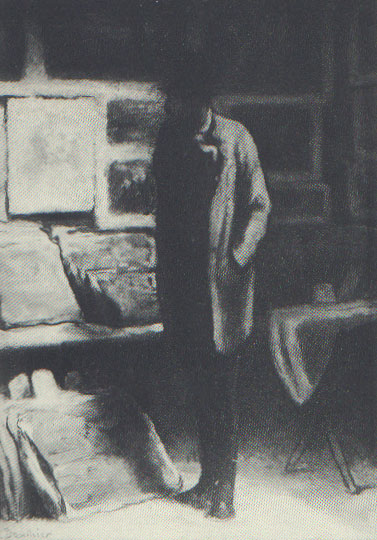 Honor (c) Daumier, L’Amateur d’Estampes, Art Institute of
Chicago. Gift of the estate of Marshal Field
Honor (c) Daumier, L’Amateur d’Estampes, Art Institute of
Chicago. Gift of the estate of Marshal Field
The advantage of being a non-professional private-scholar like Anderson is that he was un-beholden to any person, organization, or group. He could speak his mind fully and honestly; unencumbered by politics he could investigate purely for curiosity. Anderson was a private scholar, and was still collecting as a connoisseur, but already by the early part of the twentieth century this was somewhat counterproductive in a milieu that was becoming more and more dominated by Organizations. As early as 1906 Dr. Wilhelm von Bode was bullying both collectors and dealers under this new aegis of institutional collecting: “[The widow Frau Hainauer] was anxious to sell [the family collection], but Bode the Berlin Museum director, had done everything possible to prevent the sale to anyone. He wanted to buy it for the Berlin Museum and had even forbidden the few important Berlin dealers to offer more than 1,250,000 marks, although he knew the collection was worth more than double that amount. These dealers were afraid to thwart the all-powerful art-director and had promised to help him.” [xiii] And by threats over the Kaiser’s [potential] displeasure Bode kept pressure on the lady, “he has threatened me with this all the time sobbed the woman.” [xiv] Ironically, these increased pressure tactics, made possible by the increased strength of the institutional collector, was the cause for the Hainauer collection leaving Germany by stealth. Joseph Duveen much to the dismay of the Kaiser, Bode and most others, ’liberated it’ from the widow, and Germany, and sold it to top collectors in the United States. The collection of ancient tapestries, oriental rugs, renaissance sculpture, bejeweled metalwork, and finest of paintings had been given credibility and status by Bode who made the quality known to the world with a catalogue of his own making. By then he obviously felt his actions gave him a moral claim to the spoils after Oscar Hainauer died. Hainauer had been described as the “greatest collector” in Germany.
Unhappily, as a result of the Duveen/Berenson alliance, surreptitious competition between trans-Atlantic dealers, and the volatile collector market in America, there was an irreversible shifted in collector focus. It summoned the growth of bureaucracy with attendant new laws and cumbersome standards for research and documentation. To highlight the evolutionary need for documentation: in 2000 IFAR asked a number of influential people in the art field what the word, ‘’’: provenance’ meant to them. The answers ranged from the original meaning, “place of origin” to a more contemporary and complex concept put forth by the research consultant and board member of the Appraisers Association of America, Hermine Chivian-Cobb: “There are two definitions of provenance: the narrow one, which I understand to mean the complete history of an object’s ownership, from the time it left the artist’s hands (including names of dealers, private collectors, and auction sales) and the broader definition which encompasses the entire history of the work. This history would include, in addition to collections, a complete description of the piece, with (for paintings and drawings) medium, support, signature, title as given by the artist, or the most commonly known, date measurements and other significant markings; exhibition history, literature in which the work is discussed, mentioned or illustrated, including catalogue raisonn (c) entries with the relevant number, and condition, where applicable. The provenance could also include any letters or certificates of authenticity by an expert on the artist’s work and the prices for which an object has changed hands.”[xv] Implicit here is the suggestion that keeping track of previous ownership, and in particular, those who count, is in some way material to an artworks creation. James Orrock already illustrated this point a hundred years ago when he wrote: “Most people want a history, and unless this is forthcoming a consummate work of genius is often thrust aside and pronounced as a forgery; when the pedigree is established, as it frequently is, the confessed merit and the price move upwards together. Names are understood, but merit, as Ruskin says, ‘Must be taken on faith.’” [xvi] Lastly, one must look at how major art world figures such as Anthony Blunt and Kenneth Clark, and some political leaders helped to effect a movement away from the private collector. Marxism and even Fascism seemed to be their springboard at times. In England, the influential critic Anthony Blunt chose to see, in Marxism, the cure for every aesthetic ill. According to Blunt: “Those New Realists, the Mexican painters Diego Rivera and Jose Orozco, had demonstrated the way to paint the human condition without compromising their aesthetic responsibility’ The great advantage of socialism was that it would selectively retain what was valuable in bourgeois culture and jettison the rest. The state, all controlling, enlightened and wise, would take over the role once played by the patron.” [i] In 1930s Germany, Hitler’s Mein Kampf echoed the same manipulative sentiment: “Theater, art, literature, films, the press, posters, window displays, have to be cleansed, stopped from exhibiting a world that is rotting, in order to place in the service of a moral ideal that is a principal of the state and of civilization.” Even Kenneth Clark in the 1930’s was a short-term advocate of the same ostensibly unworkable covenant’ “historically speaking: “There is no doubt that Kenneth Clark was, at the time, sympathetic to socialist aims. ‘It was evident;’ he wrote to his mother early in the Second World War, ’that socialism was the only solution. A centralized government would be bound to have flaws but to have profit as the only motive was even more dreadful.’” [ii] Little did Clark realize: not only would the control he wished to see in the hands of a centralized government, eventually end up reciprocally in the hands of the aristocratically manipulated British Community, but that the elite few in control were ultimately to benefit commercially to an even greater extent than the private collector ever had. With such influential leaders reading from the same page it is no wonder that art activity shifted away from the individual collector. “An intellectual Marxist like Blunt needed little persuasion to believe that the best hope of preserving common European heritage from what Steiner terms, ‘’’: prostitution of the money market’ was by allying himself with the Communist system that not only promised but ostensibly did make public all private art collections.”[iii] During his visit to Penticton, Martin Butlin entertained with an anecdote about Anthony Blunt’s disparaging inscription in the Courtauld Institute copy of John Anderson’s book, The Unknown Turner; apparently Martin attended the Courtauld during Blunt’s tenure.
B and J Catalogue The Unknown Turner Twin Firms
HOME [1] This included approximately 300 oil Paintings at various stages of completion; and 19,000 drawings, anything from mere daubs to finished watercolours. [2] Joseph Duveen, ultimately Lord Duveen had a solid foundation in the antique and art trade, his father Sir Joseph Joel Duveen (knighted by King Edward the VII in 1908) and Uncle Henry started in Holland and within a generation opened top businesses in London and New York. [3] The reason here for highlighting the concept of invented categories is meant as a parody on Martin Butlin’s, ‘’’: hand’ theory, which is discussed later. With Berenson it was meant to be revelatory, as he attempted to recreate artists and assign works to them; whereas with Martin Butlin, the classification of certain works under unidentified “hands”, ultimately disparaged them and diverted them away from a Turner authorship. Berenson’s categories have crumbled somewhat over time, as might inevitably be the case for Martin Butlin’s hands, A, B, and, C. Many will likely be given back to Turner.
[iv] James Henry Duveen, The Rise of The House of Duveen, (Alfred A. Knoff, New York, 1957), 189-90. [v] Ibid. 293. [vi] John Walker, Self-Portrait with Donors, (Little, Brown and Company (Canada) Limited, 1974), 192 and 194. [vii] Ibid. 90. [viii] Ibid. 101. [ix] Hanna Kiel, The Bernard Berenson Treasury, (Methuen & Co. Ltd., London, 1964), 394. [x] S. N. Behrman, Duveen, (Random House, New York, 1951), 153. [xi] Martin Bailey and Sarah Greenberg, tate, the art magazine, (Wordsearch Ltd., London, issue 4, winter 1994), 6. [xii] Pierre Assouline, An Artful Life, A Biography of D.H. Kahnweiler, 1884-1979, (Grove Weidenfeld, New York, translation Charles Ruas 1990), 307. [xiii] James Henry Duveen, The Rise of The House of Duveen, (Alfred A. Knoff, New York, 1957), 251. [xiv] Ibid. 254. [xv] Hermine Chivian-Cobb, Provenance ’ " What Is It? (IFAR Journal Vol. 3, nos. 3 and 4, 2000), 4. [xvi] Byron Webber, James Orrock R.I., Painter, Connoisseur, Collector; (Chatto & Windus, London, in two volumes 1903), Vol. 1, 198.
[i] Meryle Secrest, Kenneth Clark, A Biography, (Holt, Rinehart and Winston, New York, 1984), 110-11. [ii] Ibid. 111. [iii] John Costello, Mask of Treachery, (William Collins Sons and Co. Ltd., 1988), 244. | | | | | | An introduction: JMW Turner Rescue off site: Turner Society Tate Gallery National Gallery London Courtauld Institute of Art IFAR International Foundation for Art Research NGC National Gallery Canada Frick Collection Yale Center for British Art The Getty Biro Forensic Studies CCI Canadian Conservation Institute
Wildenstein Institute McCrone Research Institute Collections International Center for Art Intelligence GMM Village Voice Andrew Wilton Rizzoli Tate Clore Christie’s Sotheby’s auction house On site: JMWT bequest news corresp bibliography sa
discovery style provenance connoisseur Orrock forensic signature Butlin legal catalogue portrait sting Courbet Roach old St Durer Manet bio Rubens
medal Unknown Turner ngc shipwreck IFAR/RRP institutional copies book your story Hand C theory C dialogue expertise expert Kayser NGL Fraud Chronology Publishers Oxford Cambridge Yale Princeton Harvard Stanford Penn State Rockefeller UPA J. Paul Getty Trust Publications University College London UCL
Penticton British Columbia Canada
(c) setters 2003, Rescuing Turner: The Art Project & [/)