JMW Turner Chronology
JMW Turner the source Art World’s Dirty Little Secret JMW Turner Chronology
 While
o’er the western wave th’ ensanguined sun,
In
gathering haze, a stormy signal spread.
And set portentous.
’ " J.M.W. Turner
While
o’er the western wave th’ ensanguined sun,
In
gathering haze, a stormy signal spread.
And set portentous.
’ " J.M.W. Turner
1775 born 21 Maiden Lane,
Covent Garden, London
to William Turner (28 yrs.) and Mary Marshall Turner (34 yrs.). William was a
barber and wig-maker. JMW’s exact birth date is still somewhat uncertain.
1785 Turner’s first adventure as an
artist was colouring engravings. This was during an extended stay with his uncle
Joseph Mallord William Marshall in Brentford, Middlesex. He attended John
White’s free school during this time.
1786 Mary Ann, Turner’s only sibling
passed away at eight years old.
1787 Began drawing and water-colouring;
several of his works were happily displayed and sold by his
father in his wig shop.
1788 Employed as a draftsman for
architects including Thomas Hardwick. He also worked with Thomas Malton, whom
Turner would later consider as his “real master.”
1789 Admitted to
the Plaster Academy of the Royal Academy Schools.
1790 First watercolour exhibited at the
Royal Academy, The Archbishop’s Palace, Lambeth.
1791 Two more watercolours exhibited at
the R.A.
He went to stay at the friend of his father in Bristol, John Narraway. He
sketched extensively in the region and did the first of his very limited number
of self-portraits (a small w/c) for the Narraway family.
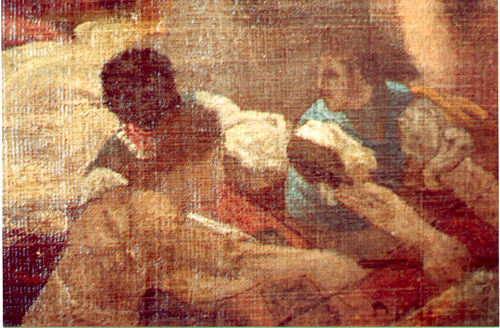 Detail, Shipwreck, the Rescue showing
three figures in a rescue boat drawing a lifeline
1792 Two watercolour R.A.
Sir Joshua Reynolds, Turner’s mentor and part-time employer
passed way. It was from Reynolds’ black servant that Turner learned compassion
for the ‘disenfranchised slave’. The kind greeting that the servant
regularly gave Turner upon his arrival at Reynolds’ studio coincided with the
grave difficulties the young painter endured at home from his mad mother. This
was likely the inspiration for Turner using the image of the ‘black hero’ in
some of his early paintings (Shipwreck, the Rescue 1802 and The Deluge
1805).
Admitted to R.A. life class.
1793 Three watercolours R.A.
The Society of Arts Awards Turner the Greater Silver Pallet.
He goes on sketching trips with his admired new friend Thomas Girtin.
He meets Dr. Monro
Begins experimenting with oil painting and etching.
Detail, Shipwreck, the Rescue showing
three figures in a rescue boat drawing a lifeline
1792 Two watercolour R.A.
Sir Joshua Reynolds, Turner’s mentor and part-time employer
passed way. It was from Reynolds’ black servant that Turner learned compassion
for the ‘disenfranchised slave’. The kind greeting that the servant
regularly gave Turner upon his arrival at Reynolds’ studio coincided with the
grave difficulties the young painter endured at home from his mad mother. This
was likely the inspiration for Turner using the image of the ‘black hero’ in
some of his early paintings (Shipwreck, the Rescue 1802 and The Deluge
1805).
Admitted to R.A. life class.
1793 Three watercolours R.A.
The Society of Arts Awards Turner the Greater Silver Pallet.
He goes on sketching trips with his admired new friend Thomas Girtin.
He meets Dr. Monro
Begins experimenting with oil painting and etching.
 1794
Five watercolour R.A.
Turner did considerable amount of topographical drawing for which he became
noted. Copper Plate Magazine commissioned drawings by Turner in 1794.
This was the first time prints were made from the artist’s work. Seen here is
Chepstow 1794.
Copper Plate M. #671 engraved by Storer from an original
Drawings by W. Turner
About this
time Turner started to take drawing students.
Started to copy English-master drawings at Dr. Monro’s along with other artists.
1795 Eight watercolours R.A.
Turner visited South Wales and the Isle of Wight to fulfill commissions for
engravings. His popularity was growing rapidly as he won several new patrons;
one of the more notable was Sir Richard Colt Hoare.
1796 First oil painting Fishermen at
Sea off the Needles; also Ten watercolours exhibited.
Turner was already imitating the tenebrous old master style as he moved
toward sublime references. Turner did a number of coastal and shipping drawings,
presumably in preparation for the monumental Sea Piece series that he was soon
to undertake.
1797 Two oil Paintings and four
watercolours R.A.
First tour north through Yorkshire and along the Northumberland coast staying at
Harewood on the journey home.
Examples of Richard Wilson’s classical landscape style were added to the
Wilson Sketch Book.
1798 Competition for Associate Membership
to the R.A. unsuccessful
First classical landscape styled after Richard Wilson,
neas and the Sibyl
Buys large collection of figure-studies by C.R. Ryley
1799 Four oils and seven watercolours at
R.A.
Elected Associate of R.A.; joins Academy Club
Becomes enamoured with the work of Claude Lorrain
Turner sells the water-colour of Caernarvon Castle to J. Angerstein for
40 guineas. His prices were steadily increasing by this point and he was having
difficulties keeping up with all the commissions (he had orders for sixty
drawings by July).
Moved to 64, Harley Street, London
Sarah Danby becomes Turner’s mistress and their first child Evalina is born;
there were two more to follow.
Plein air Knockhold sketches.
1800 Exhibited two oils including;
The Fifth Plague of Egypt (dark ground colour), and six watercolours.
Turner’s portrait by George Dance
250 guineas offered by the Duke of Bridgewater to paint a companion piece for
his sea-piece by Willem van de Velde the younger. The result was Dutch boats
in a gail: fishermen endeavouring to put their fish on board. This work
exhibited in 1801 was highly acclaimed and might be considered the first of
Turner’s highly important series of tumultuous sea-pieces. It last sold at
Christie’s for 340,000 in 1976.
1801 Two oil paintings (including
Bridgewater Sea-piece) and four
watercolour at R.A.
Address was given in the exhibition catalogue as 75 Norton Street, Portland Row.
It remained as such for three years. The idea might be advanced here that Turner
had set up an additional studio space to accommodate the assembly style
production of those monumental sea-pieces that were to accumulate about this
time. This stockpile of finished and summarily finished works Turner would make
use of for many years
afterward.
The father became very active in Turner’s life and studio after his retirement
from the wig shop.
Turner tours Scotland.
1794
Five watercolour R.A.
Turner did considerable amount of topographical drawing for which he became
noted. Copper Plate Magazine commissioned drawings by Turner in 1794.
This was the first time prints were made from the artist’s work. Seen here is
Chepstow 1794.
Copper Plate M. #671 engraved by Storer from an original
Drawings by W. Turner
About this
time Turner started to take drawing students.
Started to copy English-master drawings at Dr. Monro’s along with other artists.
1795 Eight watercolours R.A.
Turner visited South Wales and the Isle of Wight to fulfill commissions for
engravings. His popularity was growing rapidly as he won several new patrons;
one of the more notable was Sir Richard Colt Hoare.
1796 First oil painting Fishermen at
Sea off the Needles; also Ten watercolours exhibited.
Turner was already imitating the tenebrous old master style as he moved
toward sublime references. Turner did a number of coastal and shipping drawings,
presumably in preparation for the monumental Sea Piece series that he was soon
to undertake.
1797 Two oil Paintings and four
watercolours R.A.
First tour north through Yorkshire and along the Northumberland coast staying at
Harewood on the journey home.
Examples of Richard Wilson’s classical landscape style were added to the
Wilson Sketch Book.
1798 Competition for Associate Membership
to the R.A. unsuccessful
First classical landscape styled after Richard Wilson,
neas and the Sibyl
Buys large collection of figure-studies by C.R. Ryley
1799 Four oils and seven watercolours at
R.A.
Elected Associate of R.A.; joins Academy Club
Becomes enamoured with the work of Claude Lorrain
Turner sells the water-colour of Caernarvon Castle to J. Angerstein for
40 guineas. His prices were steadily increasing by this point and he was having
difficulties keeping up with all the commissions (he had orders for sixty
drawings by July).
Moved to 64, Harley Street, London
Sarah Danby becomes Turner’s mistress and their first child Evalina is born;
there were two more to follow.
Plein air Knockhold sketches.
1800 Exhibited two oils including;
The Fifth Plague of Egypt (dark ground colour), and six watercolours.
Turner’s portrait by George Dance
250 guineas offered by the Duke of Bridgewater to paint a companion piece for
his sea-piece by Willem van de Velde the younger. The result was Dutch boats
in a gail: fishermen endeavouring to put their fish on board. This work
exhibited in 1801 was highly acclaimed and might be considered the first of
Turner’s highly important series of tumultuous sea-pieces. It last sold at
Christie’s for 340,000 in 1976.
1801 Two oil paintings (including
Bridgewater Sea-piece) and four
watercolour at R.A.
Address was given in the exhibition catalogue as 75 Norton Street, Portland Row.
It remained as such for three years. The idea might be advanced here that Turner
had set up an additional studio space to accommodate the assembly style
production of those monumental sea-pieces that were to accumulate about this
time. This stockpile of finished and summarily finished works Turner would make
use of for many years
afterward.
The father became very active in Turner’s life and studio after his retirement
from the wig shop.
Turner tours Scotland.
 1802 Elected a Royal Academician
Exhibited four oil paintings and four watercolours including his diploma piece,
Dolbadern Castle of 1800. Turner’s oils are dark and foreboding during
this period. His attempt at the tenebrous sublime as described by Edmond Burke
was disparaged and as a result many grand masterworks sat in his studio unsold.
(seen here is Shipwreck, the Rescue; related book
Art World’s Dirty Little Secret
)
Visited France and Switzerland with much time spent in the Louvre. Visited
artist’s studios; David, and Gu (c)rin.
Thomas Girtin, Turner’s artist companion passed away
1802 Elected a Royal Academician
Exhibited four oil paintings and four watercolours including his diploma piece,
Dolbadern Castle of 1800. Turner’s oils are dark and foreboding during
this period. His attempt at the tenebrous sublime as described by Edmond Burke
was disparaged and as a result many grand masterworks sat in his studio unsold.
(seen here is Shipwreck, the Rescue; related book
Art World’s Dirty Little Secret
)
Visited France and Switzerland with much time spent in the Louvre. Visited
artist’s studios; David, and Gu (c)rin.
Thomas Girtin, Turner’s artist companion passed away

1803
Five oils and two watercoulors at R.A.
Became a jury member of the Royal Academy helping to determine acceptance and
placement of works at the annual exhibition.
Fusilli, and West become critical of Turner’s lack of finish. Beaumont
disparaged that, “his foregrounds are comparative blots, and faces of figures
witht. a feature being expressed.”
Production of his large scale paintings left no time for his annual
sojourn.
Detail: foreground of Shipwreck, the Rescue,
three survivors
1804 Two oils (sea-pieces) and one
watercolour at R.A.
Death of mother after long mental illness.
Sets up a gallery at Harley Street which adjoined his Queen Anne Street home. Turner’s Gallery opens for
the first time in April.
1805
The Shipwreck exhibited at Turner’s gallery; the first oil to be engraved
and the first large single plate after Turner’s work, acquired by Sir J.
Leicester. Other exhibits were disparaged by Hoppner as ’like a Green Stall, so
rank, crude and disordered’.
Sketches Victory after the successful Battle of Trafalgar.
British Institution established amidst certain controversy over its
potential competition for the R.A. Turner’s relationship with certain high
ranking R.A. members was still at a low ebb.
1806 Turner exhibits two oils at the R.I.
including Goddess of Discord choosing the apple of contention in the garden
of the Hesperides.
One oil and one watercolour at R.A.
Turner’s work for exhibition tended to be more
finished by this point.
It was the impasto
embellished style of the highly finished Shipwreck that some artists
began imitating. Metaphorically Boaden of the Oracle criticized their
work: “so much of the trowel’ “so mortary.”
For the first time Turner’s style becomes apparent in the work of
A.W.Callcott and W. Havell.
W.F. Wells apparently persuades Turner to embark on his monumental Liber
Studiorum project. An engraving project that would govern much of Turner’s
effort for the following number of years.
Takes a house at 6 West End, Upper Mall, Hammersmith
 1807
Exhibited both in Turner’s Gallery and at the R.A.
Publication of a large Mezzotint after his Shipwreck
painting helped to spread Turner’s reputation.
Appears to have been doing some sketches from nature (along the Thames and Wey).
Appointed Professor of Perspective at RA,
often uses letters after his Name (P.P.)
Publishes part 1 of Liber Studiorum
1808
About twelve oils, and dozens of sepia drawings done for the Liber
Studiorum were shown at the Turner Gallery. One oil shown at R.A: The unpaid
bill.
Visted Petworth, Sussex, home of Lord Egremont.
Visited Yorkshire for the first time and stayed with Walter Fawkes at Farnley.
This was to establish an enduring friendship and thus prompt many future visits.
1809 He exhibits an earlier sea-piece at
the B.I., about 16 oils and 2 watercolours at the Turner Gallery, and four oils
at the R.A. It is this year that Turner started to append verse to his exhibited
paintings.
The widow Mrs. Danby and her children move from Norton Street to live with
Turner at Harley Street. Hannah Danby the niece of the widow moves in about this
time and becomes Turner’s housekeeper of sorts for the rest of the artist’s
life.
Stayed at Petworth to work on commissions for Lord Egremont.
1810 Three oils at the R.A, many exhibits
and re-exhibits at the Turner Gallery.
Moves to 47 Queen Ann Street West.
As the artist became more established so did his holdings; he valued his net
worth at over 12,000. This was at a time that a good home might be purchased
for 500.
Summer visit to Farnley Hall where he witnessed a storm that would later inspire
the painting of Snow storm, Hannibal and his army crossing the Alps.
1811 Four oils and five watercolours at
R.A. Turner Gallery was closed for renovations.
First lecture as professor at Royal Academy. His Perspective lectures were
greatly anticipated but due to the artist’s confused presentation they were only
marginally successful. The images he created that were used as props undoubtedly
compensated.
Turner became enamoured with Byron’s Childe Harold’s Pilgrimage
(it was a work in progress that would over the years influence both Turner’s
work and travels).
Departed London to visited Cornwall and many points in between.
1807
Exhibited both in Turner’s Gallery and at the R.A.
Publication of a large Mezzotint after his Shipwreck
painting helped to spread Turner’s reputation.
Appears to have been doing some sketches from nature (along the Thames and Wey).
Appointed Professor of Perspective at RA,
often uses letters after his Name (P.P.)
Publishes part 1 of Liber Studiorum
1808
About twelve oils, and dozens of sepia drawings done for the Liber
Studiorum were shown at the Turner Gallery. One oil shown at R.A: The unpaid
bill.
Visted Petworth, Sussex, home of Lord Egremont.
Visited Yorkshire for the first time and stayed with Walter Fawkes at Farnley.
This was to establish an enduring friendship and thus prompt many future visits.
1809 He exhibits an earlier sea-piece at
the B.I., about 16 oils and 2 watercolours at the Turner Gallery, and four oils
at the R.A. It is this year that Turner started to append verse to his exhibited
paintings.
The widow Mrs. Danby and her children move from Norton Street to live with
Turner at Harley Street. Hannah Danby the niece of the widow moves in about this
time and becomes Turner’s housekeeper of sorts for the rest of the artist’s
life.
Stayed at Petworth to work on commissions for Lord Egremont.
1810 Three oils at the R.A, many exhibits
and re-exhibits at the Turner Gallery.
Moves to 47 Queen Ann Street West.
As the artist became more established so did his holdings; he valued his net
worth at over 12,000. This was at a time that a good home might be purchased
for 500.
Summer visit to Farnley Hall where he witnessed a storm that would later inspire
the painting of Snow storm, Hannibal and his army crossing the Alps.
1811 Four oils and five watercolours at
R.A. Turner Gallery was closed for renovations.
First lecture as professor at Royal Academy. His Perspective lectures were
greatly anticipated but due to the artist’s confused presentation they were only
marginally successful. The images he created that were used as props undoubtedly
compensated.
Turner became enamoured with Byron’s Childe Harold’s Pilgrimage
(it was a work in progress that would over the years influence both Turner’s
work and travels).
Departed London to visited Cornwall and many points in between.
 1812
Four oils at the R.A, and many re-exhibits at the newly reopened Turner Gallery
.
Issued part X of the Liber Studiorum this year.
Began building a country retreat named Solus Lodge (later to be called
Sandycombe Lodge) for him and his father.
Turner digestive tract caused him a bout of ill health.
1813 R.A: Two oils including Frosty
Morning (featured his daughter and his horse, Crop-ear). Continued his
summer exhibitions at his Turner Gallery.
Moved to Sandycombe Lodge with “Daddy.’
Toured West country (Devon etc.) with Cyrus Redding and Eastlake; he did
delicate plein air oil sketches on prepared paper. Turner was entering
his second period; whereby, be was doing much more delicate and well crafted
oils and watercolours. This might have come from his articulate efforts in the
print field.
The influential connoisseur Sir George Beaumont continues to disparage Turner’s
work. As a result of this apparent conflict Turner depends less on Aristocratic
patronage and more on middle class support for his work.
1814 R.A: one oil, Dido and
neas. By this point the influence of Claude
and Classical landscape on Turner’s work predominates. British Institute: his
competition piece was disqualified as a late entry. Exhibition as usual in
Turner’s Gallery… his more experimental work.
Founder member of Artists’ General Benevolent Institution, supports this for many
years.
Working on Picturesque Views of the Southern Coast of England for
publication (engraved by Cooke).
1815 Four oils and two watercolours at the
R.A; exhibition of earlier works seen at his own gallery. Turner started
altering and improving his work on the exhibition walls of the Academy just
prior to exhibition. R.A. had set three varnishing days aside for minor
touchups, but as his colleagues would soon learn Turner was willing to take this
liberty to the extreme.
Painted Dido
Building Carthage; eventually refuses five thousand guineas for it (a
huge sum of money two centuries ago). He never sold this painting and finally
bequeathed it to the British Nation.
End of war with France, so he was once again able to travel in Europe.
1817 was his first trip after the Battle of Waterloo.
Produced The Book of Ornithology while staying with the Fawkes’.
1816 Two oils at the R.A… Turner
Gallery had no exhibition, enlargements to the gallery area were in the
planning.
Dr. Whitaker commissioned work for The History of Yorkshire.
Chairman Artists’ General Benevolent Institution
Beaumont was appointed to the Committee of Taste in order to judge the
the Waterloo monument competition. Although Turner made a trip through the
region of the battle the following year and later painted a monumental work of
the battle, Beaumont’s appointment was likely the reason Turner did not enter.
Publication of canto three of Byron’s Childe Harold, and its reference to
Ehrenbrietstein and the French general Marceau was to have a profound influence
on Turner, his travels, and his artwork the following year.
1812
Four oils at the R.A, and many re-exhibits at the newly reopened Turner Gallery
.
Issued part X of the Liber Studiorum this year.
Began building a country retreat named Solus Lodge (later to be called
Sandycombe Lodge) for him and his father.
Turner digestive tract caused him a bout of ill health.
1813 R.A: Two oils including Frosty
Morning (featured his daughter and his horse, Crop-ear). Continued his
summer exhibitions at his Turner Gallery.
Moved to Sandycombe Lodge with “Daddy.’
Toured West country (Devon etc.) with Cyrus Redding and Eastlake; he did
delicate plein air oil sketches on prepared paper. Turner was entering
his second period; whereby, be was doing much more delicate and well crafted
oils and watercolours. This might have come from his articulate efforts in the
print field.
The influential connoisseur Sir George Beaumont continues to disparage Turner’s
work. As a result of this apparent conflict Turner depends less on Aristocratic
patronage and more on middle class support for his work.
1814 R.A: one oil, Dido and
neas. By this point the influence of Claude
and Classical landscape on Turner’s work predominates. British Institute: his
competition piece was disqualified as a late entry. Exhibition as usual in
Turner’s Gallery… his more experimental work.
Founder member of Artists’ General Benevolent Institution, supports this for many
years.
Working on Picturesque Views of the Southern Coast of England for
publication (engraved by Cooke).
1815 Four oils and two watercolours at the
R.A; exhibition of earlier works seen at his own gallery. Turner started
altering and improving his work on the exhibition walls of the Academy just
prior to exhibition. R.A. had set three varnishing days aside for minor
touchups, but as his colleagues would soon learn Turner was willing to take this
liberty to the extreme.
Painted Dido
Building Carthage; eventually refuses five thousand guineas for it (a
huge sum of money two centuries ago). He never sold this painting and finally
bequeathed it to the British Nation.
End of war with France, so he was once again able to travel in Europe.
1817 was his first trip after the Battle of Waterloo.
Produced The Book of Ornithology while staying with the Fawkes’.
1816 Two oils at the R.A… Turner
Gallery had no exhibition, enlargements to the gallery area were in the
planning.
Dr. Whitaker commissioned work for The History of Yorkshire.
Chairman Artists’ General Benevolent Institution
Beaumont was appointed to the Committee of Taste in order to judge the
the Waterloo monument competition. Although Turner made a trip through the
region of the battle the following year and later painted a monumental work of
the battle, Beaumont’s appointment was likely the reason Turner did not enter.
Publication of canto three of Byron’s Childe Harold, and its reference to
Ehrenbrietstein and the French general Marceau was to have a profound influence
on Turner, his travels, and his artwork the following year.
 Ehrenbriestein Oil sketch 9.5 x 11.5 in.
1817 R.A. -
exhibited one oil with a quote from his Falacies of Hope; Turner fancied
himself a bard during this period.
Visited the battle field of Waterloo, then traveled up the Rhine making many
sketches.
Raby Castle commissioned by Lord Darlington.
Fawkes bought fifty-one coloured drawing that derived from Turner’s Germany
expedition.
Turner re-enforced his plan for a personal benevolent bequest for indigent
British artists by purchasing a freehold building-site at Twickenham. His
Bequest was ultimately unraveled by the flush barristers at the Chancery Court,
and the rest home was never started.
1818 Three oils and one watercolour at the
R.A.
Chairman and treasurer of Artists’ General Benevolent Institution
Visited Scotland and produces images to be engraved for Sir Walter Scott’s,
The Provincial antiquities of Scotland. Visits Fawkes at Farnley on the way
back; his virtuoso watercolour technique is observed by one of the children who
in later years invests Water Thornbury, Turner’s first biographer with the
often repeated tale of Turner’s speed and talent (First Rate taking in Stores).
Serves on the Royal Academy Council.
1819 Sixty Turner watercolours were shown
at the London residence of one of Turner’s greatest patrons, Walter Fawkes
(1769-1825).
Started perspective lectures as Professor of Perspective (P.P.) at the
Royal Academy School.
Commissioned to do ten watercolour views for Hakewill’s publication,
Picturesque Tour of Italy.
Stops work on the unfinished Liber Studiorum project. Although unfinished the
project was to prove a highlight of Turner’s middle period and one that advanced
his reputation greatly.
Sir John Leicester, a longtime patron of Turner’s opened a private gallery that
included eight of Turner’s pictures. Leicester owned Turner’s most famous
Shipwreck for a short while; until his wife, disturbed by the traumatic
image beseeched her husband to make a switch.
First visit to Italy; elected honourary member of the Roman Academy of St.
Luke.
The brilliance of the Italian atmosphere had a dramatic effect on Turner’s
palette of colour. His productivity is tremendous doing twenty-five sketches a
day for two months. Two paintings from this trip: Looking East from the Guidecca,
Sunrise and San
Giorgio Maggiore.
Small inheritance of property from mother’s side of the family.
1820 One oil painting exhibited at
the R.A. Rome from the Vatican…
Fawkes’ London residence open again for viewing of his collection of
Turner’s watercolours.
Turner moves his gallery to Queen Ann Street frontage after working to enlarge
and build new gallery.
He apparently injured his Achilles tendon this year after falling on rocks while
clambering for a better sketching vantage.
1821 No exhibits. Perspective lectures
given.
Scott’s commission for
The Provincial antiquities of Scotland, eight watercolours completed
Toured and made drawings in France and along the Seine in preparation for
engravings of the region. Visits the Louvre and copies Claude.
Did several watercolours of Italian landscape for Fawkes, priced at 25 each.
1822 Turner’s newly renovated gallery
open.
To correspond with their engravings, W.B. Cooke et al successfully
exhibited twenty-four of Turner’s watercolours along with those of other British
artists.
Makes a trip to Scotland to coincide with the Royal visit in order to record the
events. This effort was in hopes of attracting royal patronage; royal
support for Turner and his work never came in the artist’s life time; in fact,
the last three monarchs of his lifetime considered him somewhat mad. The general
sketching part of the trip was productive and some history of the royal
visit was recorded in the form of four unfinished oils.
The only Royal commission came from George IV this year. The result: The
Battle of Trafalgar was audaciously received and was soon moved from St.
James’s Palace to Greenwich.
1823 Bay of Baiae at the R.A.
Another Cooke exhibition, eleven Turners shown.
Worked on The Battle of Trafalgar
Sketched the coast of France and East coast of England from the channel.
Ehrenbriestein Oil sketch 9.5 x 11.5 in.
1817 R.A. -
exhibited one oil with a quote from his Falacies of Hope; Turner fancied
himself a bard during this period.
Visited the battle field of Waterloo, then traveled up the Rhine making many
sketches.
Raby Castle commissioned by Lord Darlington.
Fawkes bought fifty-one coloured drawing that derived from Turner’s Germany
expedition.
Turner re-enforced his plan for a personal benevolent bequest for indigent
British artists by purchasing a freehold building-site at Twickenham. His
Bequest was ultimately unraveled by the flush barristers at the Chancery Court,
and the rest home was never started.
1818 Three oils and one watercolour at the
R.A.
Chairman and treasurer of Artists’ General Benevolent Institution
Visited Scotland and produces images to be engraved for Sir Walter Scott’s,
The Provincial antiquities of Scotland. Visits Fawkes at Farnley on the way
back; his virtuoso watercolour technique is observed by one of the children who
in later years invests Water Thornbury, Turner’s first biographer with the
often repeated tale of Turner’s speed and talent (First Rate taking in Stores).
Serves on the Royal Academy Council.
1819 Sixty Turner watercolours were shown
at the London residence of one of Turner’s greatest patrons, Walter Fawkes
(1769-1825).
Started perspective lectures as Professor of Perspective (P.P.) at the
Royal Academy School.
Commissioned to do ten watercolour views for Hakewill’s publication,
Picturesque Tour of Italy.
Stops work on the unfinished Liber Studiorum project. Although unfinished the
project was to prove a highlight of Turner’s middle period and one that advanced
his reputation greatly.
Sir John Leicester, a longtime patron of Turner’s opened a private gallery that
included eight of Turner’s pictures. Leicester owned Turner’s most famous
Shipwreck for a short while; until his wife, disturbed by the traumatic
image beseeched her husband to make a switch.
First visit to Italy; elected honourary member of the Roman Academy of St.
Luke.
The brilliance of the Italian atmosphere had a dramatic effect on Turner’s
palette of colour. His productivity is tremendous doing twenty-five sketches a
day for two months. Two paintings from this trip: Looking East from the Guidecca,
Sunrise and San
Giorgio Maggiore.
Small inheritance of property from mother’s side of the family.
1820 One oil painting exhibited at
the R.A. Rome from the Vatican…
Fawkes’ London residence open again for viewing of his collection of
Turner’s watercolours.
Turner moves his gallery to Queen Ann Street frontage after working to enlarge
and build new gallery.
He apparently injured his Achilles tendon this year after falling on rocks while
clambering for a better sketching vantage.
1821 No exhibits. Perspective lectures
given.
Scott’s commission for
The Provincial antiquities of Scotland, eight watercolours completed
Toured and made drawings in France and along the Seine in preparation for
engravings of the region. Visits the Louvre and copies Claude.
Did several watercolours of Italian landscape for Fawkes, priced at 25 each.
1822 Turner’s newly renovated gallery
open.
To correspond with their engravings, W.B. Cooke et al successfully
exhibited twenty-four of Turner’s watercolours along with those of other British
artists.
Makes a trip to Scotland to coincide with the Royal visit in order to record the
events. This effort was in hopes of attracting royal patronage; royal
support for Turner and his work never came in the artist’s life time; in fact,
the last three monarchs of his lifetime considered him somewhat mad. The general
sketching part of the trip was productive and some history of the royal
visit was recorded in the form of four unfinished oils.
The only Royal commission came from George IV this year. The result: The
Battle of Trafalgar was audaciously received and was soon moved from St.
James’s Palace to Greenwich.
1823 Bay of Baiae at the R.A.
Another Cooke exhibition, eleven Turners shown.
Worked on The Battle of Trafalgar
Sketched the coast of France and East coast of England from the channel.
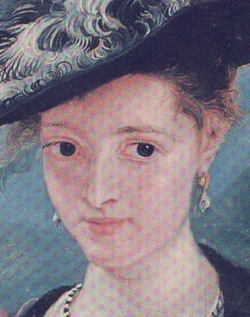 Shows
some interest in Peter Paul Rubens’
work by sketching the Flemish master’s portrait of Susanne Fourment while it was
in London:
Chapeau de Paille
(seen here).
Recollections have
it that during Turner’s visit to the Louvre in 1803, he somewhat disparaged
Ruben’s work. Perhaps he was seeing Baroque art in a new light; some of Turner’s
own figure compositions owe something to Rubens.
Visited Fawkes’ at Farnley.
Turner’s work continues to become more colourful and full of light.
Dealings with print publishes continue (Rivers of England… )
1824 Another Cooke exhibition, sixteen
watercolours shown.
Auditor of accounts at the R.A.
Helped found the Anthenaeum Club.
Sketching trips in the South of England.
“Turner’s desire to leave his pictures to the nation must have been much
confirmed by the events of 1824:–
“The British National
Gallery of Pictures was founded in 1824, during the administration of the Earl
of Liverpool, by the purchase of the collection of John Julius Angerstein, Esq.,
consisting of thirty eight pictures, and comprising nine specimens of the
British School.” (Thornbury, 1862) Turner was on the
committee to decide where to house it.
Visited Belgium, Luxembourg, Germany, and northern France.
Last visit to Farnley prior to Water Fawkes’ passing the following year.
1825 One oil, Harbour of Dieppe,
and one watercolour at the R.A.
Toured Low Countries, and the Rhine.
Picturesque views of England and Wales… This monumental project
involving the engraver and print-publisher Charles Heath was to feature
one-hundred and twenty engravings of Turner’s work.
Due partly to Turner’s father’s failing health, they left Sandycombe about this
time to live at Queen Anne Street.
1826 One oil Painting at the R.A.,
Cologne
Turner was being attacked for his liberal use of yellow.
No perspective lectures given this year.
Sir George Beaumont donates sixteen pictures to the National collection,
including five from the British school.
Poet Samuel Rogers commissioned work by Turner and Stothard for his
re-publication of Italy.
Visited Northern France.
Series of twelve mezzotints being worked on for the Little Liber; much of
the work done by Turner himself.
Major disagreement with W. B. Cooke over the poor progress of the Southern
Coast series; finished by the publisher J. and H. Arch using other
engravers.
Ports of England starting to be published.
1827 Five oils at the R.A.
Reduced number of perspective lectures due to father’s illness.
Pictures criticized for their yellow atmosphere; Mortlake Terrace disparaged as
having “yellow fever.” On a matching work done the following year Turner glued a
black cutout of a dog to the parapet in order to throw back the distance and
create a greater three dimensional illusion. At the time it was agreed that he
was willing to use whatever was at hand to help with an effect. “Tom Taylor
adduces this dog as proof of Turner’s reckless readiness of resource when an
effect in art was wanted.” (Thornbury, 1862)
Visited with Samuel Rogers at Petworth.
Visited John Nash, East Cowes, Isle of Wight. Nash commissioned two Cowes
Regatta pictures to be painted during his stay. Turner also did several
drawings, plus oil sketches on roles of canvas. The assembly-line technique
Turner used for these oils clearly defines his modus operandi when
dealing with bigger ideas. He was observed doing a series of watercolours in
progressive stages at one point, and it is quite likely that his early sea-piece
series was as an obsessive exercise done in this same fashion.
1828 Four oils at R.A. Further
concerns were subsequently published about his bright and novel colouring, and
particularly about the yellow.
Takes his last class at the RA, (they were in any case, not very
successful, sometimes his loyal father was the only attendee).
Visited Petworth to do a substantial commission for his grand and charitable
patron, Lord Egremont. Decorative panels for his dining-room.
Visited Rome and lodged with Eastlake. Here he did several oils that were
exhibited locally to a sneering audience. He also did several small landscape
sketches in oil.
1829 Three oils and one water colour at
the R.A.
In January Turner leaves Rome and on his journey north had a carriage mishap in
Mont Cenis Pass. This he recorded with a drawing.
Exhibits England and Wales
series of watercolours in London. Thomas Griffith Turner’s soon-to-be agent
and trusted friend bought several of them.
Visited France: Paris, Normandy, Brittany. Did drawings for his River’s of
Europe.
Visited Petworth.
Father passes away September 21, buried St Paul’s, Covent Garden.
The distraught artist more seriously started to consider his Bequest to
those artists less fortunate than him, his immediate family, and the nation. He
signed the first draft of his Will.
Moved (at least part-time) to the lodgings of Sophia Booth at Margate.
1830 Six oil Paintings and one
watercolour (Funeral of Sir Thomas Lawrence) at the R.A.
Two of his oils this year (Jessica and Pilate washing his hands)
seemed styled after Rembrandt.
Maintains substantial involvement with the R.A. (visitor to the Life Academy and
auditor of accounts).
William IV acceded to the throne upon the death of George IV
Publication of Roger’s Italy with twenty-five vignettes by Turner proved
a great success.
Mid summer tour of the Midlands.
Turner resigns from the Artists’ General Benevolent Institution
after a dispute with other members over use of funds. He had been a founding
member in 1814.
1831 Seven oils at the R.A. and two
watercolours at the Liverpool Academy.
Has health problems this year but still has the energy to visit Petworth and
Scotland (gathers material for Scott’s Poems).
Robert Cadell, Scott’s publisher travels with Turner and ultimately negotiates
an agreement with the artist to illustrate another volume of Rogers'
poems.
Alters will regarding specifics of bequest to the National Gallery (exchanges
Decline of Carthage). Minor changes also included the establishment of a
fund from which various charities could be serviced.
Shows
some interest in Peter Paul Rubens’
work by sketching the Flemish master’s portrait of Susanne Fourment while it was
in London:
Chapeau de Paille
(seen here).
Recollections have
it that during Turner’s visit to the Louvre in 1803, he somewhat disparaged
Ruben’s work. Perhaps he was seeing Baroque art in a new light; some of Turner’s
own figure compositions owe something to Rubens.
Visited Fawkes’ at Farnley.
Turner’s work continues to become more colourful and full of light.
Dealings with print publishes continue (Rivers of England… )
1824 Another Cooke exhibition, sixteen
watercolours shown.
Auditor of accounts at the R.A.
Helped found the Anthenaeum Club.
Sketching trips in the South of England.
“Turner’s desire to leave his pictures to the nation must have been much
confirmed by the events of 1824:–
“The British National
Gallery of Pictures was founded in 1824, during the administration of the Earl
of Liverpool, by the purchase of the collection of John Julius Angerstein, Esq.,
consisting of thirty eight pictures, and comprising nine specimens of the
British School.” (Thornbury, 1862) Turner was on the
committee to decide where to house it.
Visited Belgium, Luxembourg, Germany, and northern France.
Last visit to Farnley prior to Water Fawkes’ passing the following year.
1825 One oil, Harbour of Dieppe,
and one watercolour at the R.A.
Toured Low Countries, and the Rhine.
Picturesque views of England and Wales… This monumental project
involving the engraver and print-publisher Charles Heath was to feature
one-hundred and twenty engravings of Turner’s work.
Due partly to Turner’s father’s failing health, they left Sandycombe about this
time to live at Queen Anne Street.
1826 One oil Painting at the R.A.,
Cologne
Turner was being attacked for his liberal use of yellow.
No perspective lectures given this year.
Sir George Beaumont donates sixteen pictures to the National collection,
including five from the British school.
Poet Samuel Rogers commissioned work by Turner and Stothard for his
re-publication of Italy.
Visited Northern France.
Series of twelve mezzotints being worked on for the Little Liber; much of
the work done by Turner himself.
Major disagreement with W. B. Cooke over the poor progress of the Southern
Coast series; finished by the publisher J. and H. Arch using other
engravers.
Ports of England starting to be published.
1827 Five oils at the R.A.
Reduced number of perspective lectures due to father’s illness.
Pictures criticized for their yellow atmosphere; Mortlake Terrace disparaged as
having “yellow fever.” On a matching work done the following year Turner glued a
black cutout of a dog to the parapet in order to throw back the distance and
create a greater three dimensional illusion. At the time it was agreed that he
was willing to use whatever was at hand to help with an effect. “Tom Taylor
adduces this dog as proof of Turner’s reckless readiness of resource when an
effect in art was wanted.” (Thornbury, 1862)
Visited with Samuel Rogers at Petworth.
Visited John Nash, East Cowes, Isle of Wight. Nash commissioned two Cowes
Regatta pictures to be painted during his stay. Turner also did several
drawings, plus oil sketches on roles of canvas. The assembly-line technique
Turner used for these oils clearly defines his modus operandi when
dealing with bigger ideas. He was observed doing a series of watercolours in
progressive stages at one point, and it is quite likely that his early sea-piece
series was as an obsessive exercise done in this same fashion.
1828 Four oils at R.A. Further
concerns were subsequently published about his bright and novel colouring, and
particularly about the yellow.
Takes his last class at the RA, (they were in any case, not very
successful, sometimes his loyal father was the only attendee).
Visited Petworth to do a substantial commission for his grand and charitable
patron, Lord Egremont. Decorative panels for his dining-room.
Visited Rome and lodged with Eastlake. Here he did several oils that were
exhibited locally to a sneering audience. He also did several small landscape
sketches in oil.
1829 Three oils and one water colour at
the R.A.
In January Turner leaves Rome and on his journey north had a carriage mishap in
Mont Cenis Pass. This he recorded with a drawing.
Exhibits England and Wales
series of watercolours in London. Thomas Griffith Turner’s soon-to-be agent
and trusted friend bought several of them.
Visited France: Paris, Normandy, Brittany. Did drawings for his River’s of
Europe.
Visited Petworth.
Father passes away September 21, buried St Paul’s, Covent Garden.
The distraught artist more seriously started to consider his Bequest to
those artists less fortunate than him, his immediate family, and the nation. He
signed the first draft of his Will.
Moved (at least part-time) to the lodgings of Sophia Booth at Margate.
1830 Six oil Paintings and one
watercolour (Funeral of Sir Thomas Lawrence) at the R.A.
Two of his oils this year (Jessica and Pilate washing his hands)
seemed styled after Rembrandt.
Maintains substantial involvement with the R.A. (visitor to the Life Academy and
auditor of accounts).
William IV acceded to the throne upon the death of George IV
Publication of Roger’s Italy with twenty-five vignettes by Turner proved
a great success.
Mid summer tour of the Midlands.
Turner resigns from the Artists’ General Benevolent Institution
after a dispute with other members over use of funds. He had been a founding
member in 1814.
1831 Seven oils at the R.A. and two
watercolours at the Liverpool Academy.
Has health problems this year but still has the energy to visit Petworth and
Scotland (gathers material for Scott’s Poems).
Robert Cadell, Scott’s publisher travels with Turner and ultimately negotiates
an agreement with the artist to illustrate another volume of Rogers'
poems.
Alters will regarding specifics of bequest to the National Gallery (exchanges
Decline of Carthage). Minor changes also included the establishment of a
fund from which various charities could be serviced.
 1832
Six oils at the R.A. including Childe Harold’s Pilgrimage and Staffa.
Judging by the published response to the sea pieces exhibited this year it might
be assumed that they were stylistically in keeping with his earliest sea pieces
series. This might prove a good example of how Turner exhibited his works out of
sequence, and show that he had an ample store-house of “mere beginnings” or
nearly complete works to draw on whenever needed.
Twelve watercolours for Scott’s Poem’s exhibited in Pall Mall with the
publishers Moon, Boys, and Graves.
Involved in the debate over space allocation to the R.A. in the National
Gallery, Trafalgar Square.
Visited the less than congenial Delacroix in Paris; the French Romantic painter
found his guest somewhat untailored. Takes a French tour to gather material for
Scott’s Life of Napoleon.
Visited Petworth, then spent Christmas at East Cowes Castle with John Martin and
John Nash.
Staying more frequently at Margate.
1833 Six oil paintings at the R.A.
including his first Venetian subjects. The size of his oils are somewhat
smaller. One might assume that Turner was trying by this time to appeal to a
broader market by selling smaller works, works that he derogatorily named
“scraps.” His prices remained strong.
Tenth year as auditor of R.A. accounts.
Turner’s Annual Tour: Wandering by the Loire published.
Seventy-eight drawings exhibited by publishers Moon, Boys, and Graves (sixty-six
England and Wales drawings). Turner’s soon-to-be agent, Thomas Griffith
lent twenty-seven of the England and Wales drawings to the exhibition.
Buys art at Dr. Thomas Monro sale including several of his own works. Turner was
sensitive about his prices; and thus, he was known to buy his own pictures back
to create competition. This helped prop up his prices overall.
Continental tour Berlin, Dresden, Prague, and Vienna. He apparently visited art
museums along the way in hopes of bringing back helpful ideas for the National
Gallery that was being started this year in London. Visits Venice.
Wanderings by the Seine and Rogers’s Poetical Works published.
Elected Visitor to the Life Academy.
1834 Five oils shown at the R.A
including The Golden Bough
Roger’s Poems published this year, Thirty-three Turner vignettes.
Tours Meuse, Moselle and the Rhine. Spent time with Sophia Booth at Margate
Monro of Novar buys several of Turner’s published drawings (Scott’s Poetical
Works).
Toured the continent gathering material for planned Great Rivers of Europe.
Visited with Chantrey and Leslie at Petworth.
Exhibited some of his earlier paintings at the Society of British Artists.
1835 Five oil paintings exhibited at
the R.A.
Burning of the Houses of Lords and Commons exhibited at the British
Institution. He worked on it considerably after it was hung. The Spectator
gave it a rave review.
Continues to be Visitor to the R.A. Life Academy and Painting School
Continues to be auditor for the R.A.
Mostly early works being shown at Turner’s Gallery.
Much of his varying print production was being published or republished during
this period of his life (Rogers’s Poetical Works, Milton’s Poetical
works, Annual Tours, England and Wales).
1936 Three oil paintings exhibited at the
R.A. including Juliet and her nurse
Two oils exhibited at the Royal Institution including Wreckers on the
North Shore
Monro of Novar, now an important patron bought two of the paintings at R.A.
exhibition and goes on a continental sketching tour with Turner. Tours France, Switzerland and Val d’Aosta
John Ruskin, although still only seventeen campaigned in Turner’s defense after
a scathing article appeared in Blackwood Magazine.
Elected to the Academy council.
Has a stretch of ill health this winter.
1937 Four oils exhibited at the R.A.
including The Parting of Hero and Leander. R.A. at its new location
adjoining the National Gallery in Trafalgar Square. Turner was on the hanging
committee.
Dutch boats in a gale from 1801 (Bridgewater Sea-piece) exhibited at the
British Institution alongside its pendant piece done by the Dutch old master Van
de Velde.
French tour and amongst other places he visited Versailles. Visited Petworth.
Thomas Campbell’s Poems published; twenty illustrations after Turner.
Death of patron Lord Egremont. Resigns as Professor of Perspective,
R.A.
1938 Three oil paintings exhibited at the
R.A. Monro of Novar bought two Italian scenes.
British Institution winter exhibition Fishing Boats, with Hucksters
bargaining for fish. This appears to be one of those works started
thirty-five or so years earlier. The inspiration to mine one of his early
sea-pieces from deep storage might have been the previous years well received
exhibition of his
Dutch boats in a gale of 1801. This series of early sea-pieces is
one that a thorough study of the canvases will eventually be able to help date
sequentially. There is little doubt that these pictures all came from the same
rolls of canvas.
Visited Margate and on the way back to London was inspired by the
Temeraire being towed up the Thames (the evening sun as a backdrop). It was
to be broken up.
1939 Five oil paintings exhibited at the R.A.
one reworked painting from 1934 exhibited at the British Institution.
Paints The Fighting Temeraire age 64
Toured Belgium and the Rhine.
Exhibition of many Turner watercolours in Leeds. From Farnley (the Fawkes
collection).
Codicils to his will reduce benefits to closest family members
1840 Seven paintings exhibited at the R.A.
including Slavers throwing overboard the dead and dieing and Rockets
and blue lights, owned by James Orrock subsequently made an international
auction sales record
one painting exhibited at the B.I.
He met the critic and artist John Ruskin at Thomas Griffith’s house. Ruskin became the great champion of his work
and encouraged him to refurbish early works that had been stored in his studio
for over forty years.
Griffith was Turner’s trusted agent/dealer, he and several other artist’s
presented him with a gift of plate (silver) this year to show their gratitude
for his efforts on their behalf
Visited Venice touring through Germany
1841Six paintings exhibited at the R.A.
including Schloss Rosenau seat of H.R.H Prince Albert of Coburg, Germany.
Two paintings exhibited at the B.I.
Visits Switzerland for the first of three visits over the next
three years
Travels through Germany
Relationship with Ruskin becomes stronger
Death of close friend Sir Francis Chantrey
1842 Three paintings at the R.A. including
Burial at sea to commemorate Wilkie’s death at sea the previous year, and
Snow Storm…
Paints ten watercolours for Thos. Griffith to sell, Griffith takes one as a
commission. Ruskin enamoured with Turner’s Swiss watercolours entreats his
reluctant father to purchase. The father blamed Griffith for raising Turner’s
prices from sixty to eighty guineas each. Other buyers were Monro of Noval and
Bicknell.
Still active with his print production and sales.
Turner in bad health this winter.
1843 Six paintings at the R.A. including
Shade and darkness… and Light and colour… This pair of
pictures pictures became part of the Turner Bequest were stolen while on tour in
the 1990s but were recovered in 1993. Insurance benefit to the Tate/Clore
Gallery in the mean time– 12 million
Griffith sells six more recently drawn Swiss subjects, two to Ruskin and four to
Monro of Novar
Modern Painters, first book published this year which caused a boost to
Turner’s popularity
Toured through Germany and Switzerland
1844 Seven paintings at the R.A. including
Rain, Steam, and Speed
Meets Charles Dickens. Visits Switzerland, Heidelberg,
and the Rhine
Gillott and Bicknell each buy several paintings
Signs his land at Twickenham over to Trustees in preparation for the
establishment of almshouses to shelter aging and ailing artists. To this day
this important part of Turner’s will has not been satisfied. His greatest dream “Joseph William
Mallord Turner’s Charity for the Relief of Decayed and Indigent Artists” was
never established although there were adequate resources from his estate.
Modern Painters had stimulated further interest in Turner’s work and
Griffith was being asked about what was available for sale within the dark
recesses of the artist’s studio.
He was likely
getting some works professionally refurbished as early as this year.
Callcott, Turner’s close friend passes.
1845 Six paintings exhibited at the R.A. including
Whalers (four Venetian subjects)
Exhibited two oil paintings at the Royal Scottish Academy
Health is again poor this year
Due to R.A. President Martin Archer Shee’s illness; then resignation, Turner was
appointed acting President then deputy president for part of the year. President
elect was a position Turner had long hoped for but never realized.
James Lenox bought Staffa (ex R.A. 1832) for 500 on the advice of C.R.
Leslie
Visited France and had a friendly visit with Louis-Philippe
Wallhalla was was met with disdain when sent to Germany because of its loose
brushwork. It was returned slightly damaged and shipped at Turner’s expense
Ten Swiss watercolours painted, all sold
Griffith opens a gallery in Pall Mall
1832
Six oils at the R.A. including Childe Harold’s Pilgrimage and Staffa.
Judging by the published response to the sea pieces exhibited this year it might
be assumed that they were stylistically in keeping with his earliest sea pieces
series. This might prove a good example of how Turner exhibited his works out of
sequence, and show that he had an ample store-house of “mere beginnings” or
nearly complete works to draw on whenever needed.
Twelve watercolours for Scott’s Poem’s exhibited in Pall Mall with the
publishers Moon, Boys, and Graves.
Involved in the debate over space allocation to the R.A. in the National
Gallery, Trafalgar Square.
Visited the less than congenial Delacroix in Paris; the French Romantic painter
found his guest somewhat untailored. Takes a French tour to gather material for
Scott’s Life of Napoleon.
Visited Petworth, then spent Christmas at East Cowes Castle with John Martin and
John Nash.
Staying more frequently at Margate.
1833 Six oil paintings at the R.A.
including his first Venetian subjects. The size of his oils are somewhat
smaller. One might assume that Turner was trying by this time to appeal to a
broader market by selling smaller works, works that he derogatorily named
“scraps.” His prices remained strong.
Tenth year as auditor of R.A. accounts.
Turner’s Annual Tour: Wandering by the Loire published.
Seventy-eight drawings exhibited by publishers Moon, Boys, and Graves (sixty-six
England and Wales drawings). Turner’s soon-to-be agent, Thomas Griffith
lent twenty-seven of the England and Wales drawings to the exhibition.
Buys art at Dr. Thomas Monro sale including several of his own works. Turner was
sensitive about his prices; and thus, he was known to buy his own pictures back
to create competition. This helped prop up his prices overall.
Continental tour Berlin, Dresden, Prague, and Vienna. He apparently visited art
museums along the way in hopes of bringing back helpful ideas for the National
Gallery that was being started this year in London. Visits Venice.
Wanderings by the Seine and Rogers’s Poetical Works published.
Elected Visitor to the Life Academy.
1834 Five oils shown at the R.A
including The Golden Bough
Roger’s Poems published this year, Thirty-three Turner vignettes.
Tours Meuse, Moselle and the Rhine. Spent time with Sophia Booth at Margate
Monro of Novar buys several of Turner’s published drawings (Scott’s Poetical
Works).
Toured the continent gathering material for planned Great Rivers of Europe.
Visited with Chantrey and Leslie at Petworth.
Exhibited some of his earlier paintings at the Society of British Artists.
1835 Five oil paintings exhibited at
the R.A.
Burning of the Houses of Lords and Commons exhibited at the British
Institution. He worked on it considerably after it was hung. The Spectator
gave it a rave review.
Continues to be Visitor to the R.A. Life Academy and Painting School
Continues to be auditor for the R.A.
Mostly early works being shown at Turner’s Gallery.
Much of his varying print production was being published or republished during
this period of his life (Rogers’s Poetical Works, Milton’s Poetical
works, Annual Tours, England and Wales).
1936 Three oil paintings exhibited at the
R.A. including Juliet and her nurse
Two oils exhibited at the Royal Institution including Wreckers on the
North Shore
Monro of Novar, now an important patron bought two of the paintings at R.A.
exhibition and goes on a continental sketching tour with Turner. Tours France, Switzerland and Val d’Aosta
John Ruskin, although still only seventeen campaigned in Turner’s defense after
a scathing article appeared in Blackwood Magazine.
Elected to the Academy council.
Has a stretch of ill health this winter.
1937 Four oils exhibited at the R.A.
including The Parting of Hero and Leander. R.A. at its new location
adjoining the National Gallery in Trafalgar Square. Turner was on the hanging
committee.
Dutch boats in a gale from 1801 (Bridgewater Sea-piece) exhibited at the
British Institution alongside its pendant piece done by the Dutch old master Van
de Velde.
French tour and amongst other places he visited Versailles. Visited Petworth.
Thomas Campbell’s Poems published; twenty illustrations after Turner.
Death of patron Lord Egremont. Resigns as Professor of Perspective,
R.A.
1938 Three oil paintings exhibited at the
R.A. Monro of Novar bought two Italian scenes.
British Institution winter exhibition Fishing Boats, with Hucksters
bargaining for fish. This appears to be one of those works started
thirty-five or so years earlier. The inspiration to mine one of his early
sea-pieces from deep storage might have been the previous years well received
exhibition of his
Dutch boats in a gale of 1801. This series of early sea-pieces is
one that a thorough study of the canvases will eventually be able to help date
sequentially. There is little doubt that these pictures all came from the same
rolls of canvas.
Visited Margate and on the way back to London was inspired by the
Temeraire being towed up the Thames (the evening sun as a backdrop). It was
to be broken up.
1939 Five oil paintings exhibited at the R.A.
one reworked painting from 1934 exhibited at the British Institution.
Paints The Fighting Temeraire age 64
Toured Belgium and the Rhine.
Exhibition of many Turner watercolours in Leeds. From Farnley (the Fawkes
collection).
Codicils to his will reduce benefits to closest family members
1840 Seven paintings exhibited at the R.A.
including Slavers throwing overboard the dead and dieing and Rockets
and blue lights, owned by James Orrock subsequently made an international
auction sales record
one painting exhibited at the B.I.
He met the critic and artist John Ruskin at Thomas Griffith’s house. Ruskin became the great champion of his work
and encouraged him to refurbish early works that had been stored in his studio
for over forty years.
Griffith was Turner’s trusted agent/dealer, he and several other artist’s
presented him with a gift of plate (silver) this year to show their gratitude
for his efforts on their behalf
Visited Venice touring through Germany
1841Six paintings exhibited at the R.A.
including Schloss Rosenau seat of H.R.H Prince Albert of Coburg, Germany.
Two paintings exhibited at the B.I.
Visits Switzerland for the first of three visits over the next
three years
Travels through Germany
Relationship with Ruskin becomes stronger
Death of close friend Sir Francis Chantrey
1842 Three paintings at the R.A. including
Burial at sea to commemorate Wilkie’s death at sea the previous year, and
Snow Storm…
Paints ten watercolours for Thos. Griffith to sell, Griffith takes one as a
commission. Ruskin enamoured with Turner’s Swiss watercolours entreats his
reluctant father to purchase. The father blamed Griffith for raising Turner’s
prices from sixty to eighty guineas each. Other buyers were Monro of Noval and
Bicknell.
Still active with his print production and sales.
Turner in bad health this winter.
1843 Six paintings at the R.A. including
Shade and darkness… and Light and colour… This pair of
pictures pictures became part of the Turner Bequest were stolen while on tour in
the 1990s but were recovered in 1993. Insurance benefit to the Tate/Clore
Gallery in the mean time– 12 million
Griffith sells six more recently drawn Swiss subjects, two to Ruskin and four to
Monro of Novar
Modern Painters, first book published this year which caused a boost to
Turner’s popularity
Toured through Germany and Switzerland
1844 Seven paintings at the R.A. including
Rain, Steam, and Speed
Meets Charles Dickens. Visits Switzerland, Heidelberg,
and the Rhine
Gillott and Bicknell each buy several paintings
Signs his land at Twickenham over to Trustees in preparation for the
establishment of almshouses to shelter aging and ailing artists. To this day
this important part of Turner’s will has not been satisfied. His greatest dream “Joseph William
Mallord Turner’s Charity for the Relief of Decayed and Indigent Artists” was
never established although there were adequate resources from his estate.
Modern Painters had stimulated further interest in Turner’s work and
Griffith was being asked about what was available for sale within the dark
recesses of the artist’s studio.
He was likely
getting some works professionally refurbished as early as this year.
Callcott, Turner’s close friend passes.
1845 Six paintings exhibited at the R.A. including
Whalers (four Venetian subjects)
Exhibited two oil paintings at the Royal Scottish Academy
Health is again poor this year
Due to R.A. President Martin Archer Shee’s illness; then resignation, Turner was
appointed acting President then deputy president for part of the year. President
elect was a position Turner had long hoped for but never realized.
James Lenox bought Staffa (ex R.A. 1832) for 500 on the advice of C.R.
Leslie
Visited France and had a friendly visit with Louis-Philippe
Wallhalla was was met with disdain when sent to Germany because of its loose
brushwork. It was returned slightly damaged and shipped at Turner’s expense
Ten Swiss watercolours painted, all sold
Griffith opens a gallery in Pall Mall
 1846
Six oils exhibited at the R.A. (Two Venetian subjects)
Two paintings exhibited at the Royal Scottish Academy. One painting at the
British Institution, Queen Mab’s Cave
Increased interaction with the Ruskin family. Attends birthday
Turner on varnishing day by S.W.Parrott c. 1846
Rents lodgings and moves with Mrs. Booth and son to Cheyne Walk, Chelsea and lives rest
of his life as a recluse under pseudonym of Admiral Booth.
Health continues to be problematic. After twenty two years he no longer acts as
auditor for the Academy. This was his last year on council; he presided as
Deputy President.
1847 One painting exhibited at the R.A. It
was a repainted canvas from almost fifty years earlier, The hero of a hundred
fights
Two paintings exhibited at the Royal Scottish Academy including The Temple
of Jupiter at Athens from 1816
Turner befriended J.J.E. Mayall the photographer and had his photograph taken
(at the time the photographer did not realize the importance of his subject). It
was unwittingly erased from the plate by an assistant.
1848 No works exhibited at the R.A;
1824 was the last time he failed to exhibit at the R.A.
Popularity bolstered by Ruskin’s writings; hires the assistant Francis Sherrell
to help restore large paintings that were for many years stored haphazardly in
his studio. As early as 1844 he told Griffith:
“if I could find a
young man acquainted with picture cleaning and would help me to clean accidental
stains away, would be a happiness to drag them from their dark abode.”
Revises his Will. One codicil made the Turner Bequest null and void
if the Nation failed to act in accordance with other aspects of the Will dealing
with posthumous exhibition of his work. Presently, his wish of creating a
facility for indigent artists from proceeds of the Will has still not been
provided for.
Increasing Infirmity.
1849 Two paintings including The Wreck
Buoy (repainted) were exhibited at the R.A.
Revises his Will further.
Exhibition of old master paintings at the British Institution. Two by Turner
shown including a work from his early monumental sea piece series, Wreck of a
Transport Ship. Much praised.
1850 Last exhibition at the Royal Academy,
four pictures shown.
1851 December 19, Turner passes away in Chelsea home.
His last words have been reported as: “The Sun is God.” Buried in St
Paul’s Cathedral. Bequeaths 19,000 works to Nation.
1846
Six oils exhibited at the R.A. (Two Venetian subjects)
Two paintings exhibited at the Royal Scottish Academy. One painting at the
British Institution, Queen Mab’s Cave
Increased interaction with the Ruskin family. Attends birthday
Turner on varnishing day by S.W.Parrott c. 1846
Rents lodgings and moves with Mrs. Booth and son to Cheyne Walk, Chelsea and lives rest
of his life as a recluse under pseudonym of Admiral Booth.
Health continues to be problematic. After twenty two years he no longer acts as
auditor for the Academy. This was his last year on council; he presided as
Deputy President.
1847 One painting exhibited at the R.A. It
was a repainted canvas from almost fifty years earlier, The hero of a hundred
fights
Two paintings exhibited at the Royal Scottish Academy including The Temple
of Jupiter at Athens from 1816
Turner befriended J.J.E. Mayall the photographer and had his photograph taken
(at the time the photographer did not realize the importance of his subject). It
was unwittingly erased from the plate by an assistant.
1848 No works exhibited at the R.A;
1824 was the last time he failed to exhibit at the R.A.
Popularity bolstered by Ruskin’s writings; hires the assistant Francis Sherrell
to help restore large paintings that were for many years stored haphazardly in
his studio. As early as 1844 he told Griffith:
“if I could find a
young man acquainted with picture cleaning and would help me to clean accidental
stains away, would be a happiness to drag them from their dark abode.”
Revises his Will. One codicil made the Turner Bequest null and void
if the Nation failed to act in accordance with other aspects of the Will dealing
with posthumous exhibition of his work. Presently, his wish of creating a
facility for indigent artists from proceeds of the Will has still not been
provided for.
Increasing Infirmity.
1849 Two paintings including The Wreck
Buoy (repainted) were exhibited at the R.A.
Revises his Will further.
Exhibition of old master paintings at the British Institution. Two by Turner
shown including a work from his early monumental sea piece series, Wreck of a
Transport Ship. Much praised.
1850 Last exhibition at the Royal Academy,
four pictures shown.
1851 December 19, Turner passes away in Chelsea home.
His last words have been reported as: “The Sun is God.” Buried in St
Paul’s Cathedral. Bequeaths 19,000 works to Nation.
Art World’s Dirty Little Secret
Institutional evolution Butlin Joll catalogue Connoisseurship
J.M.W. Turner
Penticton (c) setters 2003, Rescuing Turner: The Art Project & [/)